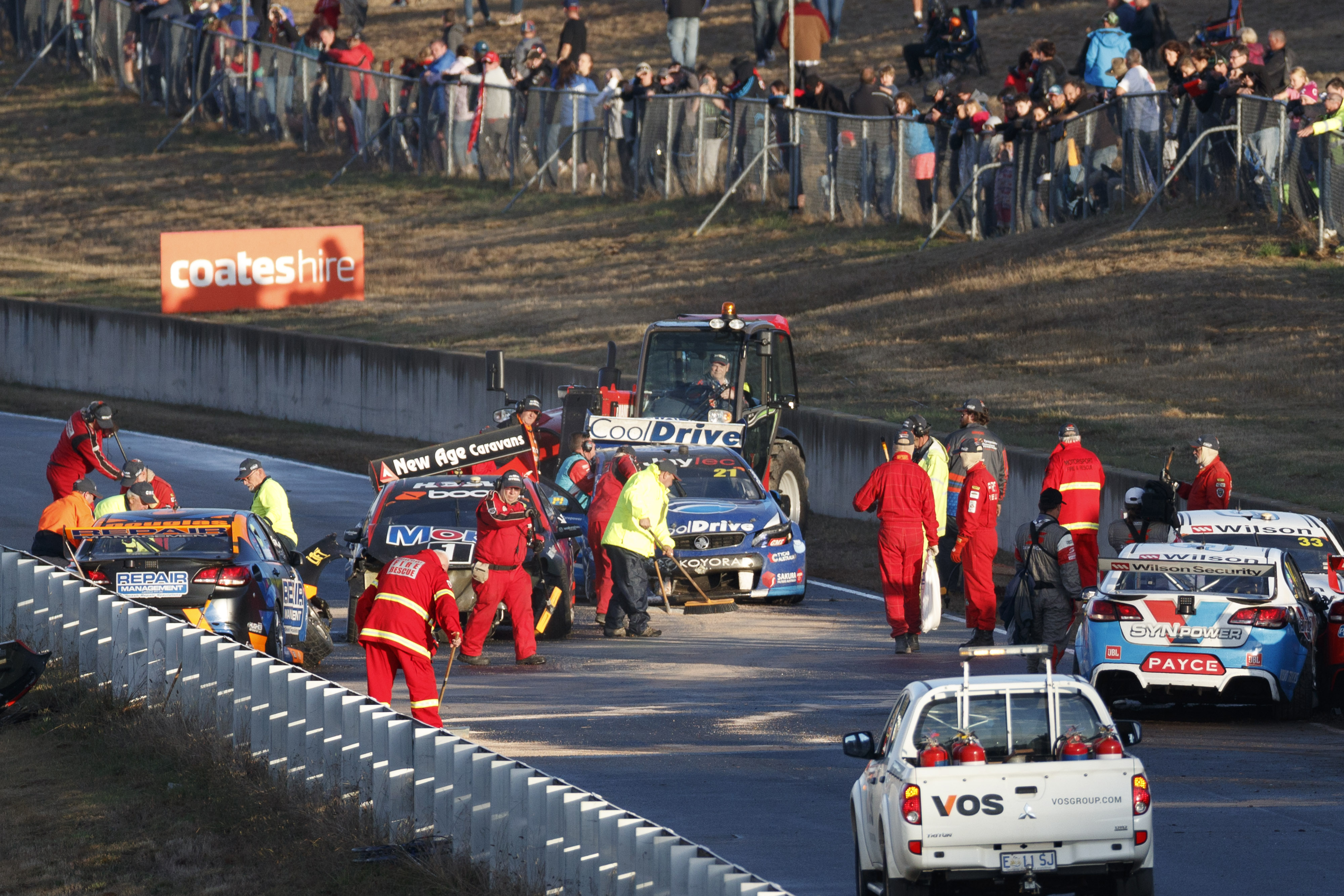
Supercars Chain Reaction Smashes: What Causes Massive Pile-ups?
The roar of high-performance engines, the blur of speed, and the nail-biting proximity of apex predators on four wheels define the exhilarating world of supercar racing. Yet, beneath the glamour and adrenaline lies an ever-present danger: the multi car smash supercars. These aren't just minor fender-benders; they are often catastrophic chain reactions that can involve dozens of vehicles, leaving behind a trail of shattered carbon fiber, twisted metal, and disrupted races. But what exactly triggers these spectacular yet terrifying pile-ups? Understanding the complex interplay of factors, from physics to psychology, is crucial to appreciating both the inherent risks and the ongoing efforts to make this extreme sport safer.
The Anatomy of a Catastrophe: Defining the Multi-Car Supercar Smash
A multi-car smash in the context of supercars or high-performance touring cars isn't merely an aggregation of individual accidents. It's a systemic failure, often initiated by a single incident that rapidly escalates due to the unique characteristics of the racing environment. Imagine a tightly packed grid, cars mere inches apart, traveling at immense speeds into a braking zone or through a fast corner. When one vehicle loses control, whether through driver error, mechanical failure, or contact, the consequences ripple through the entire field.
The term "chain reaction" is particularly apt here. Drivers behind the initial incident have fractions of a second to react, their vision often obscured by smoke, debris, or other cars. Evasive maneuvers are difficult, if not impossible, given the minimal spacing and high closing speeds. This inevitably leads to subsequent impacts, drawing more and more cars into the developing maelstrom. The result is a chaotic, sprawling scene that can bring an entire race to a halt, demanding extensive clean-up and significant safety interventions.
Key Instigators: Common Causes Behind Supercar Pile-ups
While every multi car smash supercars incident has its own unique narrative, several recurring themes emerge as primary instigators. These factors often combine in unfortunate ways to create the perfect storm for a pile-up.
High-Speed Environments and Limited Grip
Supercars are engineered for extreme speed and cornering prowess. However, this very capability also amplifies the risks. At speeds exceeding 250 km/h, braking distances are monumental, and reaction times become critical. A sudden change in grip – perhaps due to an oil spill, light rain, or simply pushing the tires beyond their limit – can send a car spinning. Once a vehicle loses traction and deviates from its line, it becomes an unpredictable obstacle in the path of oncoming traffic. The G-forces involved in both braking and cornering are immense, pushing both car and driver to their absolute limits. When these limits are momentarily exceeded, even by a tiny margin, disaster can strike.
Driver Error: A Split-Second Miscalculation
Despite the elite skill of supercar drivers, human error remains a significant factor. The pressure to win, the aggression of wheel-to-wheel combat, and the sheer intensity of racing can lead to misjudgments. These might include:
- Late Braking: Pushing the braking point too far, leading to overshooting a corner or making contact with a competitor.
- Aggressive Overtakes: Attempting to squeeze into a gap that isn't quite there, resulting in contact and loss of control for one or both cars.
- Loss of Concentration: Even a momentary lapse can have dire consequences at high speed.
- Misreading Track Conditions: Failing to adjust adequately to changing grip levels, especially during transitional weather.
A single driver's mistake, however minor, can set off a catastrophic chain reaction, particularly when cars are running in close formation.
Track Conditions and Layout Challenges
The design of a racetrack plays a crucial role in incident potential. Certain track characteristics are inherently more prone to pile-ups:
- Tight Corners and Chicanes: Bottlenecks that force cars into close proximity, increasing the chance of contact.
- Blind Corners: Drivers cannot see incidents ahead until they are almost upon them, severely limiting reaction time.
- Street Circuits: Tracks like the one in Townsville or Adelaide, carved through city streets, feature unforgiving concrete barriers and minimal run-off areas. A loss of control here almost guarantees a hard impact and potential rebound into the path of other cars. The Adelaide V8 Supercar Crashes, particularly the Dunlop car incident at Wakefield Street where it crashed through a fence into a tree, vividly illustrate the severity of incidents on such circuits.
- Wet Weather: Rain drastically reduces grip, makes visibility poor, and causes spray, making it incredibly difficult for drivers to navigate safely.
Mechanical Failures and External Factors
While supercars undergo rigorous maintenance, mechanical failures can still occur. A tire blowout, a sudden brake failure, or suspension damage can instantly render a car uncontrollable. Similarly, external factors like debris on the track from an earlier incident, or even an animal crossing the circuit, can initiate a dangerous sequence of events, culminating in a multi car smash supercars incident.
Iconic Incidents: Learning from Real-World Supercar Smashing
Examining specific events provides a stark reminder of the forces at play and the rapid escalation that can occur.
The Townsville Super2 Supercars Chaos
The Townsville Super2 crash is a prime example of how quickly a minor incident can escalate into a major pile-up. While specific details of the initial trigger are often debated, such incidents typically begin with contact between two cars in a high-speed sector or a braking zone. In a tightly packed field, perhaps on the opening lap when drivers are eager to gain positions, a spin or a slight touch can send one car sideways. The cars behind, often unsighted or with nowhere to go due to the proximity of concrete walls on a street circuit, then become involved. The resulting scene is one of multiple impacts, flying debris, and a rapid deployment of safety vehicles. It highlights the unforgiving nature of street circuits and the critical importance of disciplined driving in dense traffic. For a deeper dive into this event, you can read more about the Townsville Super2 Crash: Unpacking the Multi-Car Chaos.
Adelaide's Perilous Wakefield Street Encounter
The mention of "Another huge crash at Adelaide," specifically the Dunlop car crashing at the top of Wakefield Street and smashing through the outer fence into a tree, underscores the immense energy involved in supercar crashes. This particular incident suggests not only a high-speed impact but also a significant loss of directional control that carried the car off the track and beyond the primary safety barriers. Such events are terrifying for their potential to injure not just drivers but also trackside personnel and even spectators if safety measures are breached. They serve as a powerful reminder of why continuous advancements in track design, barrier technology, and vehicle safety are paramount.
Mitigating the Mayhem: Strategies for Enhanced Safety
Despite the inherent risks, motorsport organizations, engineers, and drivers are constantly working to reduce the frequency and severity of multi car smash supercars. Safety is a never-ending pursuit, driven by lessons learned from every incident.
Advanced Vehicle Safety Systems
Modern supercars incorporate an array of safety features designed to protect the driver in a crash:
- Carbon Fiber Monocoques: Incredibly strong, rigid safety cells that protect the driver's compartment.
- Roll Cages: Integrated structures that prevent roof collapse.
- HANS Device & Multi-Point Harnesses: Restrict head and neck movement and firmly secure the driver in their seat.
- Energy-Absorbing Structures: Designed to crumple predictably and dissipate impact energy away from the driver.
Track Design and Barrier Innovation
Race tracks are continually evolving with safety in mind:
- Increased Run-off Areas: Expansive paved or gravel areas allow drivers to slow down and regain control after leaving the track.
- Energy-Absorbing Barriers: Technologies like SAFER barriers (Steel and Foam Energy Reduction) or tire walls are designed to deform on impact, reducing the forces exerted on the vehicle and driver.
- Improved Sightlines: Modifications to track layouts to ensure drivers have a clear view of the track ahead, reducing the chances of unsighted impacts.
Race Control and Driver Protocols
Effective race management is critical during an incident:
- Yellow Flags & Safety Cars: Rapid deployment of yellow flags, or the safety car, to neutralize the race and allow for safe incident clear-up.
- Virtual Safety Car (VSC): A system that forces all cars to slow down to a predetermined speed without bunching them up behind a physical safety car, often used for less severe incidents.
- Driver Briefings & Penalties: Strict rules and penalties for aggressive driving or disregard for safety protocols aim to encourage disciplined racing.
Driver Skill and Training
Ultimately, the human element remains vital. Drivers undergo extensive training, focusing not just on speed but also on situational awareness, defensive driving techniques, and the ability to make split-second decisions under immense pressure. Continuous practice and experience are invaluable in navigating the chaotic ballet of competitive supercar racing.
The spectacle of supercars racing at the edge of performance is undeniably captivating. Yet, the risk of a multi car smash supercars incident is an inherent part of this high-stakes sport. While the causes are varied and complex—ranging from the physics of speed and grip to human error and challenging track conditions—the commitment to understanding, mitigating, and learning from these events is unwavering. Through relentless innovation in vehicle safety, track design, and race management, motorsport continues its vital quest to balance the thrill of competition with the paramount goal of driver and spectator safety.